
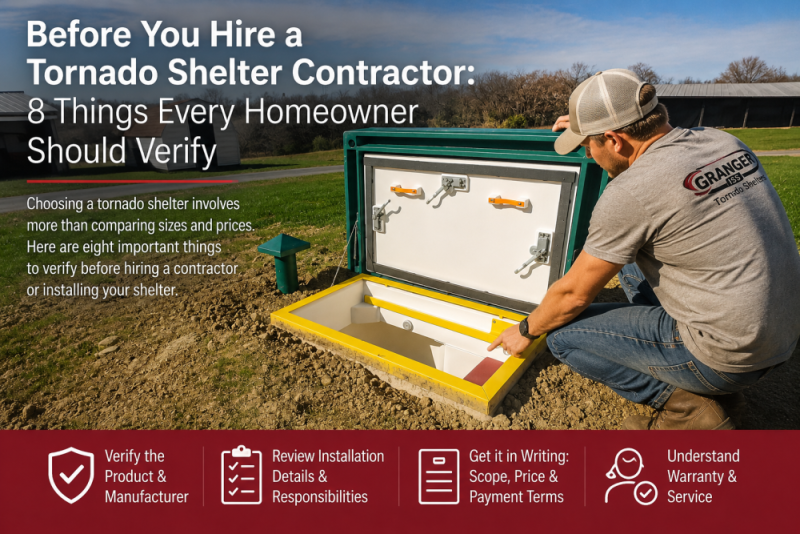
Choosing a tornado shelter or storm shelter involves more than comparing sizes and prices. Homeowners also need to understand who manufactured the shelter, who will install it, what standards and testing support the product's claims, and who will be there if a problem develops after installation.
Recent news reports involving storm shelter contractors offer an important reminder: the company behind the shelter matters.
In separate 2026 incidents, homeowners in Tennessee and Oklahoma reported serious problems involving storm shelter projects. One homeowner reported paying for a shelter that she said could not be opened and subsequently being unable to reach the contractor. In another case, authorities alleged that a contractor accepted thousands of dollars for a storm shelter project that was not completed.
The lesson for homeowners isn't to be afraid of purchasing a tornado shelter. It's to do your homework before signing a contract or handing over money.
Here are eight things every homeowner should investigate when comparing tornado shelter manufacturers, dealers and installers.
1. Verify Who Actually Manufactures the Tornado Shelter
One of the first questions to ask is surprisingly simple:
Who actually made the shelter?
The company providing your quote may be the manufacturer, an authorized dealer, an installer, a general contractor or simply a reseller.
Those distinctions matter.
Ask for the manufacturer's full name and the specific model being proposed. Then determine who is responsible for the shelter itself and who is responsible for its installation.
A reputable seller should be able to clearly explain the relationship between the manufacturer, dealer and installer rather than leaving you guessing about who is accountable for each part of the project.
2. Ask for Documentation Supporting Safety and Testing Claims
Terms such as “tornado rated,” “storm tested,” “FEMA compliant” and similar phrases can sound reassuring, but homeowners should ask what those claims actually mean.
Ask the manufacturer or contractor to provide documentation supporting the shelter's design and testing claims.
Homeowners researching Granger ISS can view tornado shelter testing and impact-test videos to see the supporting testing information directly.
Depending upon the shelter and installation, relevant standards and guidance may include:
- FEMA P-320 residential safe room guidance
- FEMA P-361 safe room guidance
- ICC 500 storm shelter requirements
- Impact or debris testing documentation
- Engineering documentation applicable to the shelter design
Not sure how those resources differ? Learn what ICC 500-compliant means when buying a tornado shelter and how ICC 500 relates to FEMA P-320, FEMA P-361, testing and manufacturer documentation.
Important: FEMA does not “approve,” “certify” or recommend individual tornado shelter contractors or products. Be cautious if a seller represents itself or a particular shelter as “FEMA certified” or “FEMA approved.” Ask instead for documentation explaining the standards, engineering and testing applicable to the shelter.
A credible manufacturer should be willing to discuss these questions rather than expecting homeowners to rely solely on advertising terminology.
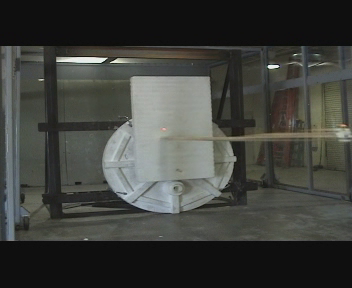
Homeowners researching Granger ISS can view tornado shelter testing and impact-test videos to see the supporting testing information directly.
3. Understand Exactly How the Storm Shelter Will Be Installed
A tornado shelter is not simply another item delivered to your house.
Installation is part of the shelter system.
Depending upon the shelter design and installation location, considerations may include the foundation, anchoring system, concrete requirements, placement, clearances, drainage, utilities and local building requirements.
Before signing a contract, ask:
- Who performs the installation?
- What foundation or concrete conditions are required?
- How is the shelter anchored?
- Who determines whether the proposed location is appropriate?
- Are permits or inspections required?
- What installation documentation will I receive?
If the answers are vague before the sale, don't assume they will become clearer after you've paid.
4. Verify the Door, Latching System and Emergency Operation
The shelter door deserves particular attention because occupants must be able to enter the shelter quickly and exit after the storm.
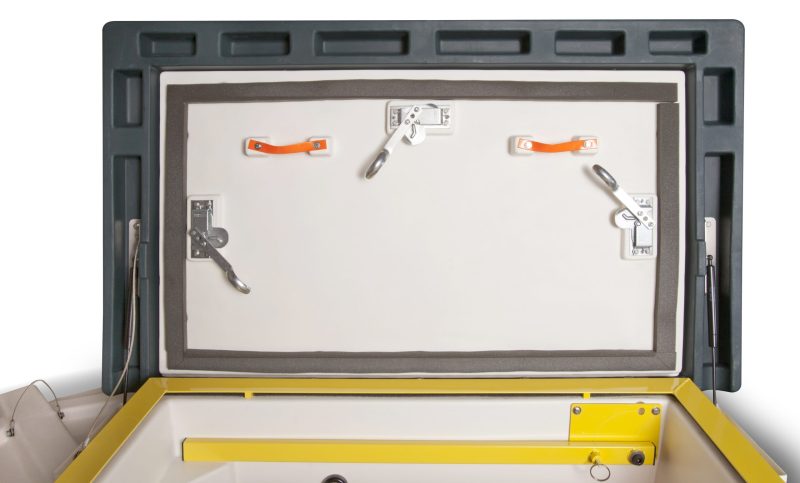
Ask how the door and locking or latching system operate. Find out whether the system can be operated from inside the shelter and what procedures should be followed if debris accumulates outside.
Homeowners should also ask what testing or documentation applies to the complete door assembly—not merely the material from which the door is made.
You can also review the Granger ISS tornado shelter door, three-point locking system and safety features in more detail.
Before accepting a completed installation, physically operate the door and locking system yourself.
Every adult member of the household who may need to use the shelter should understand how it opens, closes and secures.
5. Investigate the Company Before Paying a Large Deposit
Before making a significant payment, take time to investigate the company you're hiring.
Depending upon your state and locality, that may include checking:
- Business registration
- Applicable contractor licenses
- Insurance
- How long the company has been operating
- Physical business location
- Customer references
- Complaint history
- Online reviews and patterns within those reviews
Don't rely on a professional-looking website or social media page alone.
A tornado shelter can represent a substantial investment. The company accepting your money should be identifiable, reachable and able to document its role in the project.
6. Get the Scope, Price and Payment Terms in Writing
A written quote or contract should make it clear what you are actually purchasing.
Look for details such as:
- Manufacturer and shelter model
- Shelter size or capacity
- Installation location
- Site preparation responsibilities
- Concrete or foundation work
- Anchoring and installation
- Delivery charges
- Permits or inspections, if applicable
- Total project price
- Deposit amount
- Payment milestones
- Estimated installation schedule
- Warranty responsibilities
Be especially careful about paying the entire project price upfront without understanding why full payment is required and what protections you have if the work is delayed or never completed.
Keep copies of contracts, invoices, receipts, emails and other project communications.
7. Know Who Handles Warranty and Service After Installation
A question homeowners sometimes overlook is:
Who do I call three years from now?
Ask whether the warranty comes from the manufacturer, dealer, installer or some combination of the three.
Understand what is covered and for how long. Ask whether there are separate warranties for the shelter structure, door components, hardware and installation workmanship.
Also ask what happens if the dealer or installer stops operating.
A warranty is considerably more useful when the homeowner knows who actually stands behind it.
8. Don't Let Price Be the Only Deciding Factor
Price matters. It simply shouldn't be the only factor.
Two tornado shelter quotes may represent very different products and services once you compare the shelter design, testing, installation, documentation, warranty and company behind them.
Instead of asking only:
“Which tornado shelter costs less?”
also ask:
- What exactly am I buying?
- Who manufactured it?
- What testing supports its claims?
- Who installs it?
- How is it anchored?
- What documentation will I receive?
- Who stands behind the product after installation?
The lowest quote isn't necessarily the best value, and the highest quote doesn't automatically mean the best shelter. Documentation and clear answers matter more than assumptions.
FREE Tornado Shelter Buyer's Checklist
Take the questions with you before you buy. Granger ISS created a printable Tornado Shelter Buyer's Checklist to help homeowners compare manufacturers, shelters, installers and quotes.
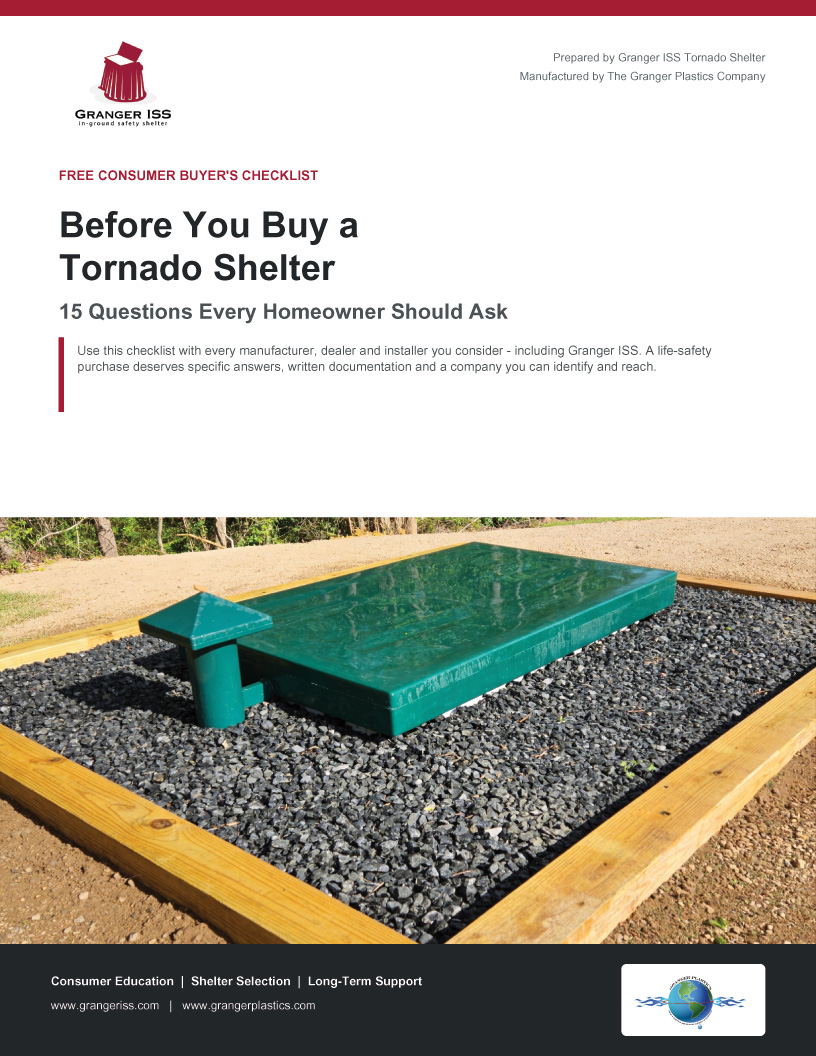
Enter your email below for immediate access. We'll also email you a copy so you can keep it with you while researching tornado shelters.
Before You Sign a Tornado Shelter Contract
A tornado shelter is purchased for a very specific reason: to provide a place of protection when severe weather threatens your family.
That makes asking questions before the sale especially important.
A homeowner should never feel uncomfortable asking a manufacturer, dealer or installer to explain the shelter, its testing, its installation requirements, its warranty or the documentation supporting its claims.
Good questions deserve clear answers.
Take your time. Compare more than price. Keep documentation. Understand who is responsible for each part of the project, and know who you'll call if you need help after installation.
Learn More About Granger ISS Tornado Shelters
Granger ISS encourages homeowners to educate themselves before purchasing any residential tornado shelter. Compare products carefully, investigate the companies involved and understand the installation and documentation associated with the shelter you're considering.
If you are still comparing shelter designs, manufacturers and features, review our complete guide to questions to ask before buying a tornado shelter.
Learn more about the Granger ISS Tornado Shelter and residential storm shelter resources.
This article is provided for general consumer education and is not legal, engineering or contracting advice. Building codes, contractor licensing requirements, permits and storm shelter requirements vary by jurisdiction. Homeowners should verify applicable requirements with the appropriate local authorities and qualified professionals.
DON’T STOP AT “IT’S TESTED.”
Ask what was tested, where it was tested, what criteria were used — and whether you can see the evidence.
The Granger ISS Tornado Shelter door underwent debris-impact testing at Texas Tech University.
WATCH THE TEXAS TECH IMPACT TEST