
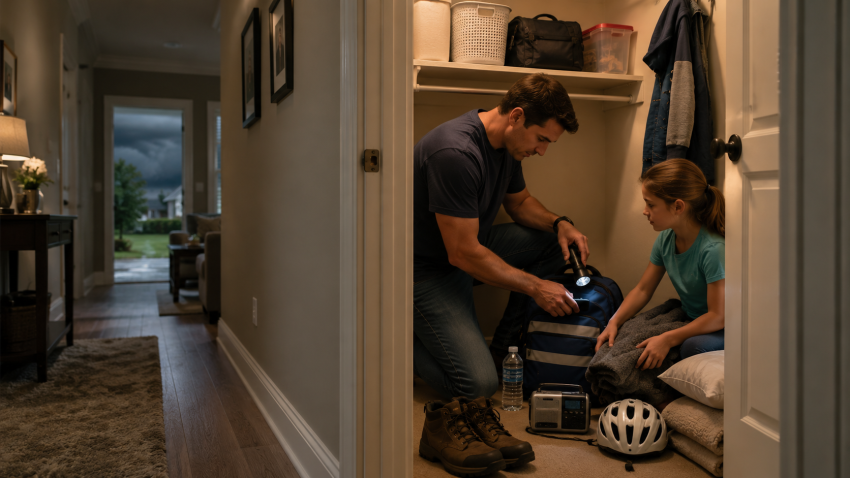
When a tornado warning is issued, one of the most familiar pieces of safety advice is to “go to the basement.”
But what if your home doesn't have one?
Millions of Americans live in homes without basements, including slab-on-grade houses, apartments, manufactured homes and mobile homes. For those households, tornado preparedness requires understanding the safest available location before severe weather arrives.
The answer also depends on the type of structure you're in. A sturdy site-built house without a basement presents a very different situation from a mobile or manufactured home.
The most important step is having a plan before the warning. A tornado warning means it is time to take action—not the time to begin deciding where your family should go.
If Your House Doesn't Have a Basement, Where Should You Go?
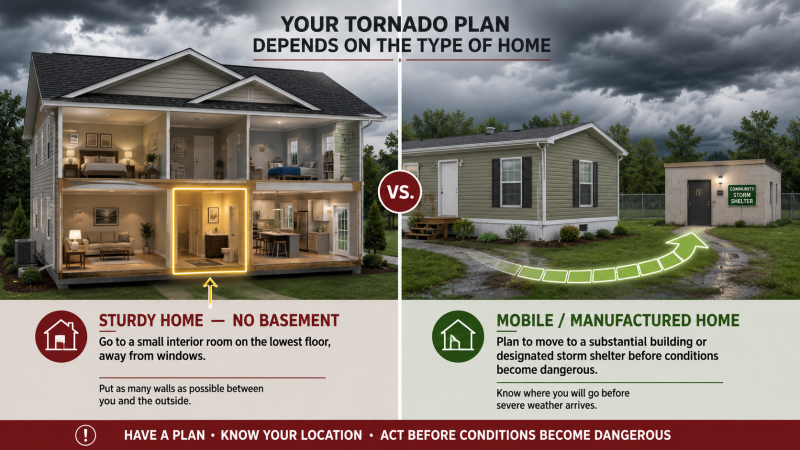
According to the National Weather Service, if you are in a sturdy house or building without a basement, move to a small interior room or hallway on the lowest floor.
Good options may include an interior:
- Bathroom
- Closet
- Hallway
- Small room without windows
The objective is to put as many walls as possible between you and the outside while staying away from windows and exterior walls.
Once there, get low and protect your head and neck from flying or falling debris. Blankets, pillows, mattresses or helmets may provide additional protection when available without delaying your move to shelter.
Do not waste valuable time opening windows. That long-standing tornado myth does not make a home safer.
Review National Weather Service guidance for what to do during a tornado
A Mobile or Manufactured Home Requires a Different Tornado Plan
This distinction is extremely important.
An interior bathroom or closet in a mobile home should not be treated the same way as an interior room in a sturdy site-built house.
Federal Emergency Management Agency and National Weather Service guidance warns that mobile homes are not considered safe places to remain during a tornado. Residents should have a plan to move to a nearby sturdy building or designated storm shelter.
That means the tornado plan for someone living in a mobile or manufactured home should identify where they will go and how they will get there before severe weather threatens.
Potential destinations may include:
- A designated community tornado shelter
- A nearby residential storm shelter or safe room
- A sturdy permanent building
- Another predetermined safe location identified as part of the household's emergency plan
The important point is not simply knowing that the mobile home is unsafe. It is knowing where you will go instead.
Don't Wait Until You See the Tornado to Leave a Mobile Home
A tornado warning can provide only a limited amount of time to act, and some tornadoes develop rapidly.
For someone who must leave a mobile or manufactured home to reach safer shelter, waiting until a tornado is visible can create another dangerous situation: being caught outside or in a vehicle while the storm is approaching.
That's why advance planning matters so much.
During periods when severe weather is expected, mobile-home residents should closely monitor weather information and be prepared to move to their predetermined shelter location before conditions become dangerous.
A tornado watch means tornadoes are possible and is an opportunity to review your plan and prepare to act. A tornado warning means a tornado has been sighted or indicated by weather radar and immediate protective action is necessary.
Learn the difference between a Tornado Watch and Tornado Warning
What About Apartments Without Basements?
Apartment residents should also determine their shelter location before severe weather arrives.
If the building does not have a designated tornado shelter or basement, seek the lowest accessible level and move toward a small interior room or hallway away from windows.
Residents of upper floors should know in advance whether they can access a safer lower-level location and how long it will take to reach it.
Don't assume you'll have enough time to figure this out after a warning appears on your phone.
If you live in an apartment building, ask property management whether the building has a designated severe-weather shelter area or emergency procedure.
What If Your Home Has No Good Interior Room?
Some houses have open floor plans, large exterior windows or layouts that provide few obvious interior shelter locations.
Walk through the home before severe weather occurs and identify the best available location on the lowest floor.
Consider:
- Distance from exterior walls
- Number of windows
- Number of walls between the location and outdoors
- Whether everyone in the household can reach the location quickly
- Whether pets can be brought into the space
- Whether protective items and emergency supplies can be stored nearby
If your home does not provide a location you are comfortable relying upon, you may want to investigate whether a residential tornado shelter or safe room is appropriate for your property and household.
Should You Try to Drive Away From a Tornado?
Your vehicle should not be your primary tornado shelter plan.
The National Weather Service advises that being in a vehicle during a tornado is dangerous. The best strategy is to have already identified a sturdy building, designated shelter, basement or safe room that can be reached before dangerous conditions arrive.
Likewise, do not use a highway overpass as a tornado shelter.
The goal of a good tornado plan is to avoid being forced to improvise outdoors or from inside a vehicle once a tornado is already approaching.
Build Your Tornado Plan Before the Warning
A useful household tornado plan should answer several questions:
- Where is our safest available shelter location?
- Can everyone reach it quickly?
- Does anyone in the household require mobility assistance?
- What will we do with pets?
- How will we receive weather alerts overnight?
- Do we have flashlights and emergency supplies?
- How will we protect our heads and necks from debris?
- If we live in a mobile or manufactured home, where is the nearest sturdy building or designated storm shelter?
Every member of the household should understand the plan.
Parents should also make sure children know where to go without needing lengthy instructions during an emergency.
When a Residential Tornado Shelter Becomes Part of the Plan
For some homeowners, the best available location inside the house may still leave them wanting a more purpose-built shelter option.
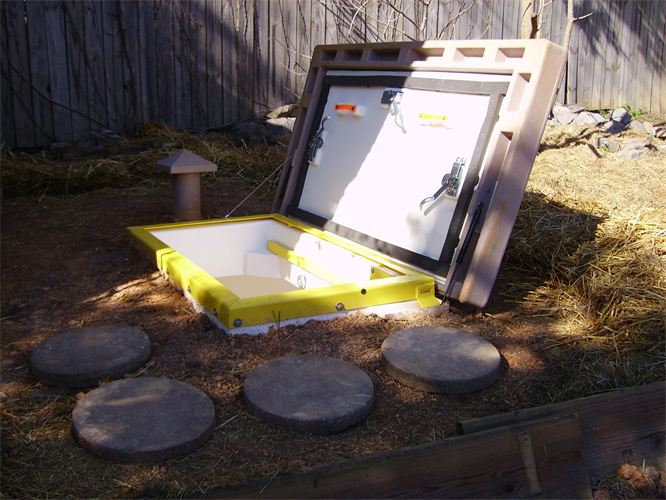
FEMA guidance recognizes both above-ground and in-ground residential safe-room configurations, including options for homes without basements.
A residential tornado shelter can provide a predetermined destination so household members know exactly where to go when severe weather threatens.
But—as with any safety-related purchase—homeowners should research the shelter carefully.
Understand the manufacturer, applicable testing and design information, installation requirements, door and locking system, warranty and who will be responsible for installation.
Before choosing a manufacturer or installer, review 8 things every homeowner should verify before hiring a tornado shelter contractor .
Considering a Tornado Shelter? Ask Questions Before You Buy
Not all homes, families or properties are the same, and neither are all tornado shelters.
If you're considering adding a residential storm shelter to your severe-weather plan, take time to compare products, understand how they are installed and ask for documentation supporting the claims being made.
For a more complete comparison guide, review questions every homeowner should ask before buying a tornado shelter .
Granger ISS encourages homeowners to make an informed decision rather than waiting until severe weather is approaching to think about shelter.
FREE Tornado Shelter Buyer's Checklist
Considering a residential tornado shelter? Take the questions with you before you buy.
Granger ISS created a printable Tornado Shelter Buyer's Checklist to help homeowners compare shelters, manufacturers, installers and quotes before making a decision.
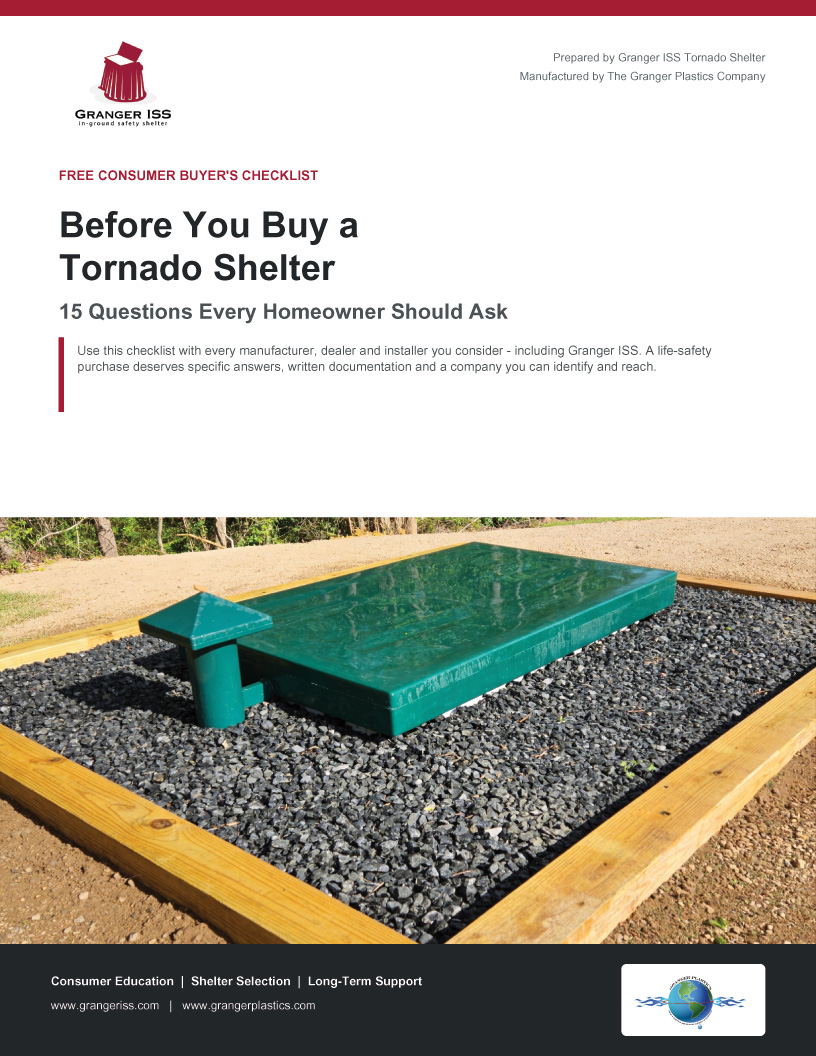
Enter your email below for immediate access. We'll also email you a copy so you can keep it for later.
Know Where You're Going Before the Weather Turns Dangerous
If your home doesn't have a basement, the answer isn't to wait for a tornado warning and hope you can figure something out.
Identify your safest location now.
For occupants of sturdy homes, that may mean a small interior room on the lowest floor, away from windows. For people living in mobile or manufactured homes, it means having a plan to reach a sturdy building or designated storm shelter before conditions become dangerous.
The few minutes available during severe weather should be spent following your plan—not creating one.
Learn more about Granger ISS residential tornado shelters
This article is provided for general tornado-preparedness education and should not replace instructions from the National Weather Service, local emergency management officials or other public-safety authorities. During severe weather, follow current official warnings and instructions for your location.
DON’T STOP AT “IT’S TESTED.”
Ask what was tested, where it was tested, what criteria were used — and whether you can see the evidence.
The Granger ISS Tornado Shelter door underwent debris-impact testing at Texas Tech University.
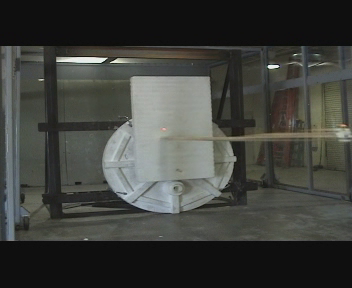 WATCH THE TEXAS TECH IMPACT TEST